Silver Glitter Digital Paper Background: A Guide to Elevating Your Designs Without the Pitfalls
If you are looking to add a touch of sophistication and sparkle to your projects, a Silver Glitter Digital Paper Background is often the first choice for designers who understand that texture speaks louder than words. This isn't just about adding shine; it is about creating an atmosphere of luxury that instantly elevates the perceived value of your work. Whether you are designing a high-end wedding invitation, a sleek business card, or a vibrant website hero section, having access to premium silver shimmer textures can make the difference between a forgettable design and one that captures attention immediately.
However, not all digital papers are created equal. Many creators rush into purchasing assets without considering the technical nuances that determine whether a file will look crisp on a screen or muddy in print. To help you avoid common pitfalls, we need to look closely at what makes a digital paper pack truly valuable and how to integrate it effectively into your workflow.
Understanding the Value of High-Resolution Shimmer Textures
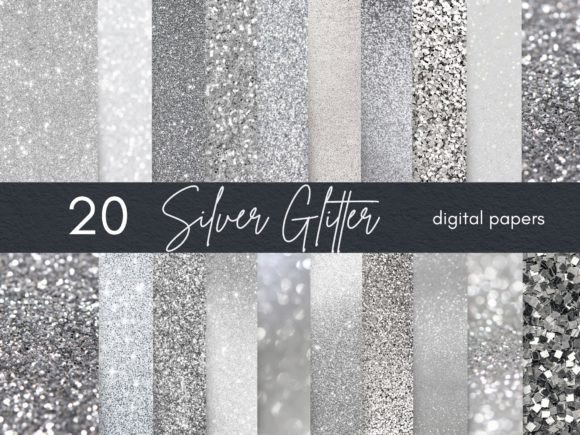
When you invest in a pack of luxury silver glitter digital papers, you are buying more than just an image; you are acquiring a versatile toolset for commercial use. The core appeal lies in the quality of the files themselves. You should expect an archive containing 20 distinct JPG files, each rendered at a professional standard of 300 DPI. This resolution is non-negotiable if you intend to print your designs as physical items like brochures or greeting cards.
A common mistake beginners make is assuming that any "glitter" image will suffice. Low-resolution files often pixelate when scaled up, destroying the illusion of fine metallic particles. In contrast, a set designed with horizontal dimensions of 5000 x 3334 pixels offers immense flexibility. You can crop these images for specific layouts without losing clarity, ensuring that the silver shimmer remains sharp whether it covers a full-screen web banner or a tiny corner of a mobile interface.
Common Mistakes in Selecting and Using Digital Papers
Even experienced designers can fall into traps when integrating new assets. One frequent error involves ignoring the format and aspect ratio of the source files. While vertical formats have their place, a horizontal layout like the 5000 x 3334 specification provides a wider canvas for landscape-oriented projects. If you force a vertical image to fit a wide header, you may end up stretching the glitter effect, which distorts the light reflection and looks unprofessional.
Another oversight is failing to check the licensing terms before starting a project. While many digital papers allow for personal use, some restrict commercial application unless explicitly stated. Fortunately, this specific collection is cleared for commercial use allowed, meaning you can confidently sell products featuring these backgrounds. However, always verify the license for every asset you download from third-party sources to avoid legal complications later.
There is also the issue of software compatibility. Photoshop is the industry standard for manipulating these textures, but not everyone knows how to blend them correctly. Simply pasting a silver background over text can sometimes create a glare that makes the content unreadable. The key is to adjust blending modes, such as setting the layer to "Overlay" or "Soft Light," rather than leaving it at 100% opacity. This technique allows the underlying text to remain legible while letting the silver shimmer peek through, creating a balanced and elegant effect.
Practical Applications Across Different Industries
The versatility of these 20 Silver Shimmer Textures extends far beyond simple scrapbooking. For entrepreneurs and small business owners, these backgrounds are perfect for branding materials. Imagine a business card where the company name sits atop a subtle silver grain; it conveys stability and prestige. Similarly, marketers can use these textures for email headers or landing pages to draw the eye toward call-to-action buttons.
Educators and bloggers often overlook the power of visual hierarchy. By using a silver glitter background for section dividers or quote blocks, you break up long stretches of text and keep readers engaged. The reflective quality of the silver mimics the look of real foil stamping, giving your digital content a tactile feel even on a flat screen.
- Websites: Use high-contrast silver textures for dark-themed sites to create depth without overwhelming the user.
- Invitations: Combine these papers with elegant typography for weddings, galas, or corporate events.
- Scrapbooking: Print the 300 DPI files to create physical albums with a metallic finish.
- Commercial Products: Apply the textures to packaging designs or promotional merchandise to increase perceived value.
What to Check Before You Buy or Download
Before finalizing your decision to purchase or download a digital paper pack, there are several critical factors to evaluate. First, confirm the file format. While JPGs are convenient for immediate use, they are lossy compression formats. Ensure that the pack includes high-quality JPEGs that do not exhibit visible artifacts around the glitter particles.
Secondly, consider the color consistency. Silver is a tricky color because it reflects its environment. A good texture pack will offer variations in tone—some cooler and icy, others warmer and champagne-like. This variety allows you to match the background to different lighting scenarios in your photos or designs. If all 20 files look identical, you are limiting your creative potential significantly.
Finally, remember that this is a digital product. There are no physical items to ship, so you must be prepared for instant access via download. If you are expecting a hard copy or a physical sample, you will be disappointed. Instead, ensure you have a reliable internet connection to download the archive quickly. Once downloaded, back up the files immediately to avoid data loss.
Maximizing Efficiency and Quality in Your Workflow
To get the most out of your Silver Glitter Digital Paper Background, treat the files as foundational elements rather than afterthoughts. Start by organizing your 20 JPG files into a dedicated folder within your project structure. This prevents the frustration of hunting for the right texture when you are under a deadline.
When working in Photoshop, utilize smart objects. Converting your glitter background into a smart object allows you to resize and transform the texture repeatedly without degrading the image quality. This is particularly useful if you need to adapt a single design for multiple platforms, such as resizing a social media post for Instagram Stories versus a desktop blog header.
Be mindful of the file size. High-resolution images at 300 DPI can be large. If you are uploading these to a website, you may need to optimize them for the web by reducing the resolution to 72 DPI and compressing the file size, while keeping the original 300 DPI versions archived for future print jobs. This dual-layer approach ensures you never compromise on quality when it matters most.
By understanding the technical requirements and creative possibilities of these textures, you can avoid the frustration of poor results. Whether you are a hobbyist exploring scrapbooking or a professional marketer crafting a brand identity, the right silver shimmer textures provide the finishing touch that turns a good design into a great one. Take the time to evaluate your needs, choose the correct specifications, and apply these assets with care to achieve stunning, professional outcomes.